
Stop technology getting in the way of your people
See where time is being lost, remove digital friction and make better technology decisions with Digital Experience Management.
Your systems can be working while your people are struggling
A green dashboard tells you that technology is available. It doesn’t tell you whether someone can work effectively. Digital Experience Management (DEX) gives you a clearer view of the experience across your digital workplace, helping you answer questions such as:
-
- Where is technology slowing people down?
- Which issues are repeatedly disrupting work?
- Who is struggling without reporting it?
- Which applications or devices need attention?
- Where should your IT team focus first?
- Are your technology investments creating the value you expected?
You can stop relying on isolated complaints, assumptions and incomplete reporting. You can see where the friction is and decide what to do about it.
Clear outcomes. Measurable value. Commercial accountability.
Book a DEX strategy session
What Digital Experience Management can help you change
We focus on the areas that directly impact user experience and productivity.
Give people time back
Identify avoidable delays, interruptions and performance problems that make everyday work harder than it needs to be.
Reduce recurring IT issues
Find patterns and underlying causes instead of repeatedly responding to the same symptoms.
Improve employee experience
Understand how people experience technology across devices, applications and services, not simply whether those technologies are technically available.
Focus your IT team
Prioritise the issues with the greatest potential impact instead of spreading time and budget across competing demands.
Make better investment decisions
Use digital experience insight to support technology planning, service improvement and investment decisions.
Show what IT is changing
Set clear measures at the start and track whether improvements are producing the outcomes your organisation cares about.
Learn more from this brochure View brochure
DEX should earn its place in your organisation
You shouldn’t have to accept vague promises of productivity, experience or value. Before your DEX service begins, we work with you to define:
-
- What needs to improve
- Which outcomes matter
- How progress will be measured
- What success looks like
- When results will be reviewed
Your measures will reflect your priorities. That could include reducing recurring support demand, improving device or application experience, removing sources of digital friction, or giving IT better evidence for its decisions. This creates a clear basis for measuring whether DEX is delivering what you agreed it should.
The precise outcomes, review period, eligibility and contractual terms are agreed with you before the service begins. Because technology should be accountable for the value it creates.
Ask us about DEX Value Assurance.
See what traditional monitoring misses
Traditional IT monitoring concentrates on infrastructure, availability and system health. DEX concentrates on the experience of the person using the technology.
It can give your IT team insight into areas such as:
- Device performance
- Application experience
- Recurring technical issues
- Digital workplace friction
- User experience trends
- The effect of technology changes
The result is a more complete view: not only whether your technology is running, but whether it is working effectively for your people.

From digital experience data to meaningful action
More data alone won’t transform your organisation. The value comes from knowing what the information means, what deserves attention and what action to take next.
1. Define the outcome
We start with your organisation’s priorities, rather than a generic list of DEX features.
2. Establish the starting point
DEX provides a view of the current experience across relevant users, devices and applications.
3. Identify the friction
We help uncover the issues and patterns that may be affecting productivity, employee experience and service performance.
4. Prioritise action
Your team can focus on the improvements most closely connected to the outcomes you agreed.
5. Measure progress
Results are reviewed against the agreed success criteria, giving you a clear framework for assessing value.
Make DEX part of continuous service improvement
Digital Experience Management is not there to create another dashboard for your IT team to monitor. It should help change how you manage and improve the digital workplace.
Wanstor brings together digital experience insight, managed services expertise and continuous service improvement. That helps turn information into practical priorities and measurable action.
DEX can support your organisation by helping you:
-
- Detect experience issues earlier
- Investigate recurring problems
- Prioritise service improvements
- Inform technology investment
- Strengthen conversations between IT and leadership
- Track whether change is improving the employee experience
The aim is simple: make technology easier to use, easier to manage and more valuable to your organisation.

If technology is slowing people down, you'll see it in DEX.
If DEX helps deliver the outcomes you've agreed, you'll have the evidence to prove it. If it doesn't, you'll know that too. That's the difference between buying software and investing in measurable improvement.
Book a DEX Strategy SessionWhat DEX has quantified
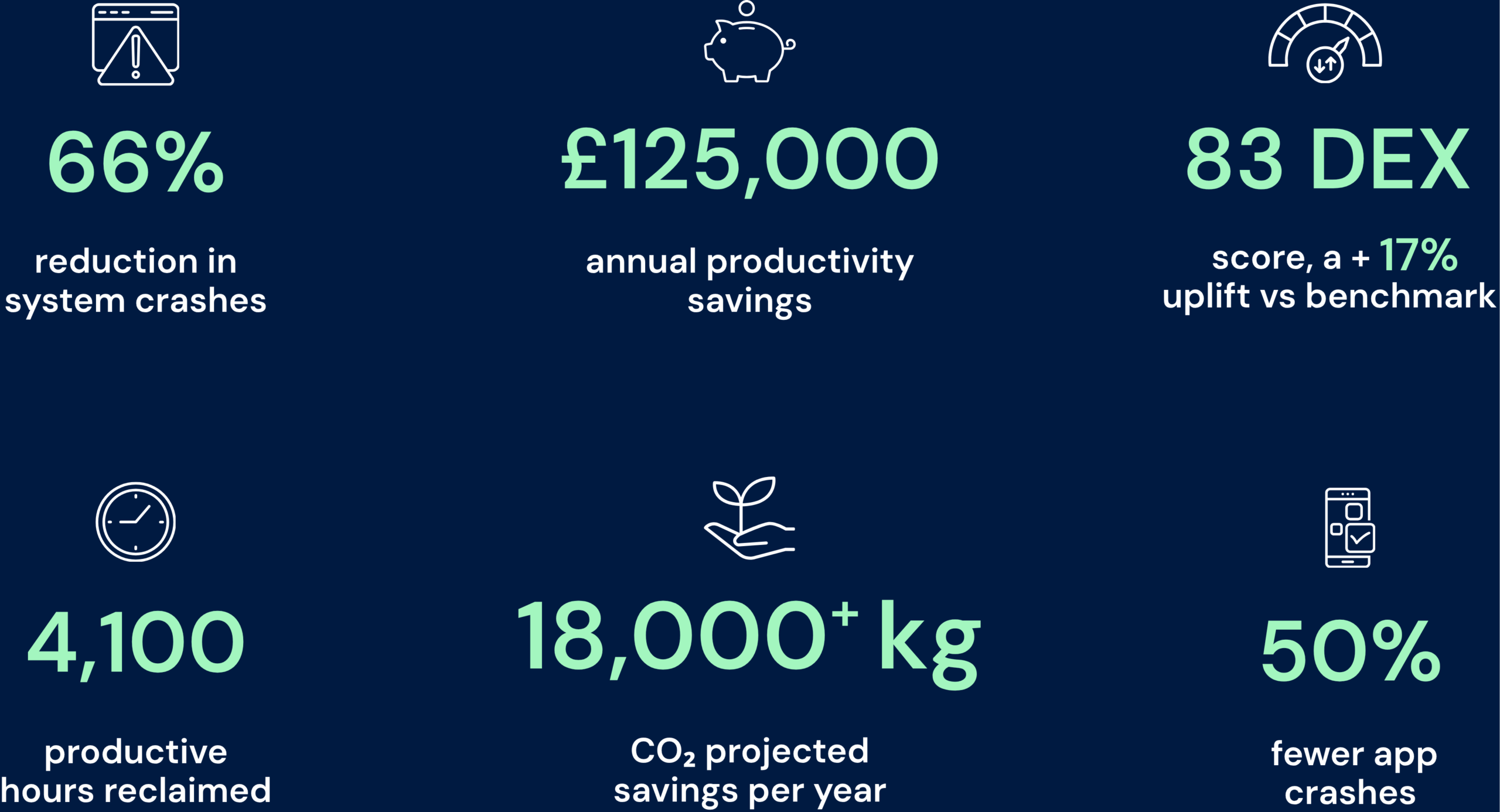
See DEX in the real world. Watch our customer case study.
Book a DEX strategy session
Frequently Asked Questions
What is Digital Experience Management?
Digital Experience Management, or DEX, helps an organisation understand how employees experience workplace technology across devices, applications and digital services. It gives IT teams insight into the issues and patterns that may affect productivity, employee experience and service performance.
How is DEX different from IT monitoring?
Traditional monitoring typically focuses on infrastructure, availability and system health. DEX focuses on the experience of the people using that technology. It helps show where devices, applications or services are creating friction, even when systems appear to be operating normally.
What business outcomes can DEX support?
The outcomes depend on the priorities agreed for your organisation. They may include reducing recurring IT problems, improving device or application experience, removing sources of digital friction and giving IT better evidence for investment and improvement decisions.
How does Wanstor measure DEX success?
Wanstor works with you to agree the intended outcomes, relevant measures, success criteria and review points before the service begins. Progress can then be assessed against the definition of success agreed for your organisation.
Does Wanstor guarantee DEX outcomes?
Wanstor’s DEX Value Assurance approach is designed to create greater commercial accountability around agreed outcomes. Where it forms part of the agreement, customers may have the option to remove DEX from their contract at an agreed review point if the agreed success criteria are not met. Eligibility, measures, review periods and contractual terms are agreed before the service begins.
Is DEX only useful when employees report problems?
No. One of the purposes of DEX is to provide insight into aspects of the technology experience that may not result in a support ticket. This can help IT teams investigate less visible sources of friction alongside formally reported issues.
Can DEX work alongside a managed IT service?
Yes. Digital experience insight can support managed service delivery by helping identify recurring issues, guide service improvements and provide a clearer view of employees’ technology experience.
Who should be involved in a DEX conversation?
DEX is relevant to leaders responsible for workplace technology, IT operations, service delivery, employee experience, transformation and technology investment. The conversation should begin with the organisational outcomes those stakeholders want to improve.
Where can I learn more about DEX?
Watch our on-demand webinar with Land Use Consultants on closing the user experience gap and implementing DEX in a live environment.